


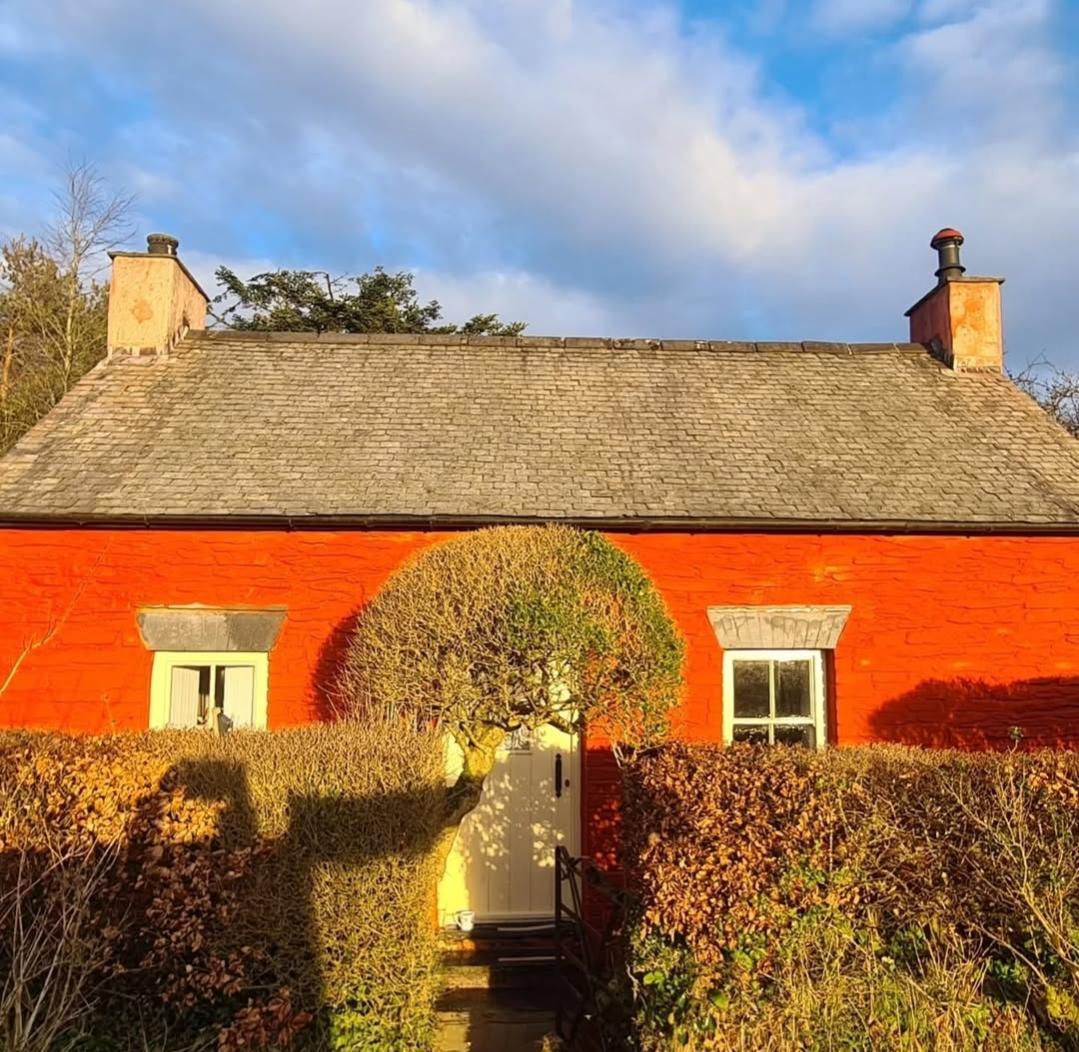
You know that feeling when you walk past an old heritage building, and the walls just seem to
breathe? There’s something about traditional lime wash that modern paints can’t quite replicate,
a depth, a softness, a kind of living quality that makes surfaces come alive.
After many years of supplying powder pigments to builders, restorers, and architects who
genuinely care about their craft, we’ve learned that colour in lime wash isn’t just decoration, it’s
part of the magic that makes this historical technique still relevant (and honestly, superior)
today.
What Actually Is Lime Wash?
If you’re new to lime wash, it’s basically slaked lime (calcium hydroxide) mixed with water. When
you apply it to a wall, something pretty cool happens: it absorbs carbon dioxide from the air and
slowly turns back into limestone. Essentially, the paint becomes part of the wall itself. How’s that
for durability?
But pure lime wash is white. Beautifully, luminously white, sure, but white. That’s where we
come in.
The Purpose of Adding Colour Pigments
Adding pigments to lime wash serves some practical purposes beyond just making things pretty
(though let’s be honest, pretty matters too):
Differentiation and Design Intent – Whether you’re restoring a Georgian townhouse or
creating a modern sustainable build, colour helps define spaces, create visual interest, and
honour historical accuracy. Those earthy ochres and soft terracottas you see on Mediterranean
buildings? That’s pigmented lime wash doing its thing.
UV Reflection Control – Different pigments reflect or absorb UV rays differently. Darker, earth-
based pigments can actually help moderate building temperatures in certain climates, while
lighter tones keep things cool. It’s building science that’s been around for millennia.
Visual Depth – Here’s where lime wash gets interesting. Because it’s slightly translucent,
pigments create this incredible depth of colour that shifts with the light throughout the day. You
just don’t get that with modern flat paints. It’s like the difference between a photograph and
seeing something with your own eyes.
The Benefits You Don’t Get Anywhere Else
We may be a tad bias but we genuinely believe lime wash with proper mineral pigments is one
of the best finishing systems you can use, especially for heritage work and eco-conscious
projects. Here’s why:
Breathability Is King
Lime wash doesn’t seal surfaces; it lets moisture vapor move through the wall assembly. This is
critical for old buildings with solid walls, and increasingly important in modern sustainable
construction. Add the wrong pigments and you can compromise that breathability. But proper
mineral pigments? They work in harmony with the lime, keeping everything permeable and
healthy.
No trapped moisture means no blistering, peeling, or that sad, sorry look paint gets when it’s
fighting against a building’s natural moisture dynamics.
The Colour Actually Gets Better With Age
Pigmented lime wash improves as it cures. As it carbonates over weeks and months, the
colours often become richer and more complex. Where conventional paint starts degrading from
day one, lime wash is literally turning into stone, and the pigments are getting locked into that
stone matrix.
We’ve seen ochre-pigmented lime wash on a barn restoration that looked decent on day one
and absolutely stunning six months later. That’s the carbonate crystals forming around the
pigment particles, creating micro-reflections and depth you can’t engineer any other way.
Antimicrobial Properties
Lime wash is naturally alkaline (high pH), which means it’s not a happy place for mold, mildew,
or bacteria. Many of our traditional mineral pigments don’t interfere with this at all, they’re
chemically stable and actually enhance lime’s protective qualities. In damp climates or humid
interiors, this is gold.
Environmental Credentials
Mineral pigments are typically earth-derived oxides, iron oxides, natural ochres, umbers,
siennas. They’re not petroleum-based, they don’t off-gas VOCs, and their production footprint is
remarkably low. Combined with lime (which actually reabsorbs CO2 as it cures), you’ve got one
of the most sustainable finishing systems available.
For LEED projects, heritage work, or clients who actually care about embodied carbon,
pigmented lime wash ticks every box.
Not All Pigments Play Well With Lime
This is probably getting a bit too technical but it matters which pigments you use. Lime is
alkaline. Really alkaline. pH around 12. That means:
- Organic pigments (like most modern paint colorants) can fade, break down, or change
colour in high pH environments. Not good. - Some mineral pigments aren’t lime-stable either—ultramarines can fade, chromium
compounds can be temperamental. - Iron oxides (red, yellow, black), titanium dioxide (white), natural ochres and
umbers—these are your workhorses. They’re what humans have been using for literally
thousands of years because they’re stable, permanent, and gorgeous.
When we supply pigments, we’re not just selling coloured powder. We’re providing materials
that we know will perform in highly alkaline environments, won’t compromise breathability, and
will stay true for decades.
The Practical Side: Using Pigments in Lime Wash
Getting good colour in lime wash isn’t complicated, but there are a few tricks:
Disperse First – Always mix your pigments with a bit of water first to create a slurry. This
prevents clumping and ensures even distribution. Nobody wants streaky walls.
Less Is More – Lime wash with just 5-10% pigment by weight can give you beautiful, saturated
colour. Push past 10-15% and you can start affecting the lime’s ability to carbonate properly.
We’re enhancing the lime, not overwhelming it.
Test Panels Are Your Friend – Lime wash looks different wet versus dry, and the final colour
develops as it carbonates. Always do test patches and let them cure for at least a week before
committing to a whole building.
Multiple Coats Build Depth – One of the beautiful things about lime wash is that you typically
apply multiple thin coats. Each layer adds translucency and depth. The colour becomes
dimensional in a way that single-coat systems can’t match.
Where We See the Best Results
In our experience, pigmented lime wash really shines in a few specific applications:
Heritage Restoration – When you’re matching original finishes on listed buildings, churches, or
historic properties, there’s often no substitute. Modern paints just don’t have the right texture,
sheen, or aging characteristics.
Sustainable New Builds – Architects designing Passivhaus projects or natural building
enthusiasts are rediscovering lime wash. It fits perfectly with materials like hemp-lime, natural
insulation, and breathable wall systems.
High-End Residential – Interior designers are increasingly specifying lime wash for feature
walls, especially in bedrooms and living spaces. That soft, matte finish with subtle colour
variation creates atmosphere modern paint just can’t touch.
Agricultural Buildings – Barns, stables, and farm buildings benefit from lime’s antimicrobial
properties and breathability. Pigmented lime wash protects while keeping the building fabric
healthy.
The Bottom Line
Colour in lime wash isn’t just about aesthetics, though the aesthetics are pretty spectacular. It’s
about creating durable, breathable, living finishes that improve over time rather than degrading.
It’s about using materials that have proven themselves over centuries, that work with buildings
rather than against them.
Whether you’re restoring a medieval church, building an eco-home, or just want walls that have
genuine character and depth, the right pigments in lime wash can give you something no
modern paint system can match: a finish that’s truly part of the building.
And honestly? In a world of disposable finishes and planned obsolescence, there’s something
deeply satisfying about putting colour on walls that will still look beautiful in a hundred years.
If you’re working on a project and wondering whether lime wash might be right for you, or if you
want to chat about which pigments would work best for your specific application, just reach out.
After all these years, I still get genuinely excited talking about this stuff.
Have questions about pigments for your lime wash project? Working on a restoration that needs
historically accurate colours? Drop us a message — we love talking about this stuff and we’re
always happy to help you get the right colour for your specific needs.